The issue of security has so far been linked to conditions of war, conflict with foreign nationals, or protecting the borders from the invasions of other countries. In peacetime, human security remains a global problem, not only in under privilaged and developing countries, but in industrialized, advanced, and modern countries. In Indonesia, most people still have a sense of insecurity, which is defined as “freedom from fear, freedom from want, and freedom to live in dignity. There are 7 types of security issues that still need to be addressed, overcome and translated through various government policies, namely security in terms of economics, food, health, environment, individual, community, and politics.
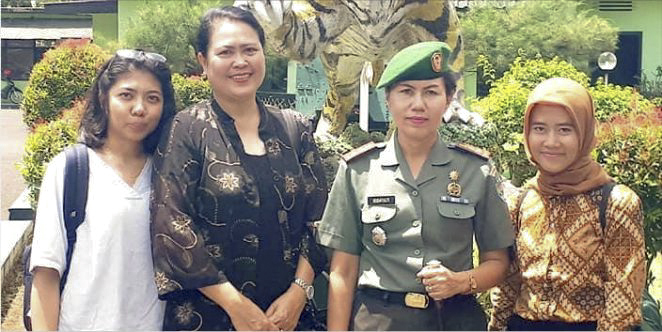
These points are elaborated on by Dr. Sukawarsini Djelantik, a lecturer in the field of International Relations at Parahyangan Catholic University (Unpar), in front of members of the Indonesian Army (TNI-AD), who are members of the Military District Command (Kodim) 0608 Cianjur on (2/4). Furthermore, she explained various problems still faced by society in West Java in general, especially in the Cianjur Regency.
Related to economic insecurity, indicated by the still high unemployment rate that caused many citizens of Cianjur origin who were forced to become migrant workers in countries such as Malaysia and Saudi Arabia. Cianjur, by the Citarum River, is also still experiencing environmental security issues, due to severe pollution from the “most polluted river” in the world. Cianjur is blessed with fertile land, but some residents still experience food insecurity not because of the lack of food supplies, but rather due to their uneven distribution.
Another aspect, namely health facilities is still a major constraint due to inadequate road access and transportation in some areas. Several areas such as Sindangbarang, Cidaun, and Argabinta are still experiencing isolation due to lack of access to transportation. Individual security concerns a widespread violation of human rights, women and children rights. Public security covers the freedom to practice religious practices for minority religions, or freedom of expression of art and culture by ethnic minorities.
The exposure received a very positive response, which was demonstrated by the variety of questions and comments made during the discussion. Military District Commander 0608 Cianjur, Lt.Col. Hida Yati, ST, MT, welcomed the cooperation between TNI and educational institutions, in this case Unpar. She hopes that similar cooperation can be developed in the future to maintain a better civil-military dialogue.