On Thursday (5/11), The Faculty of Engineering of Parahyangan Catholic University commemorated its 55th Anniversary. Unlike the previous ones, this anniversary was held by conducting a colloquium. The purpose of conducting the colloquium was to find out the quality of Tridharma activities conducted by the Faculty of Engineering of Parahyangan Catholic University (FT UNPAR); through dissemination of lecturers’ research projects that have been concluded or are still ongoing; and to find out how far students were involved in Higher Education Tridharma (Three main responsibilities of higher education).
FT UNPAR incessantly moves forward in great strides to support the continuing education program in the field of civil and architectural engineering. The 55-year journey of the Faculty of Engineering has been colored by various contributions to society; in the form of development program, curriculum formulation and learning process, as well as the continuing concept that can be applied in various research projects.
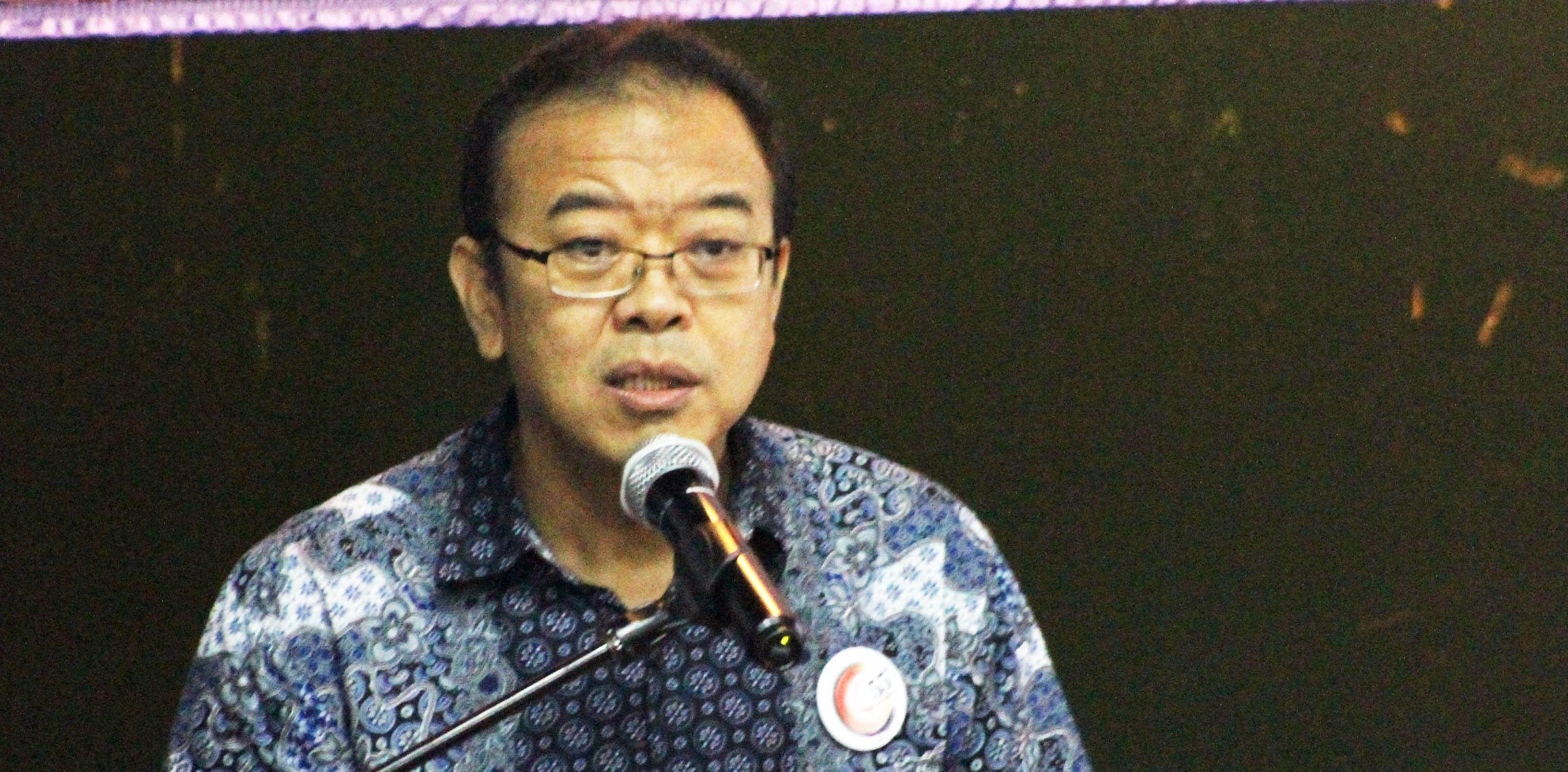
The contribution from all members of the academic community of the Faculty of Engineering of Parahyangan Catholic University was appreciated by Mangadar Situmorang, Ph.D. as Rector of Parahyangan Catholic University. In his opening remarks “The Great UNPAR: The Great Fakultas Teknik”. he gave two reasons why the Faculty Of Engineering deserves to be awarded, First, FT UNPAR has contributed in inaugurating undergraduates in the field of Civil and Architectural Engineering who have participated in national development. FT UNPAR has also produced good research works for the development of science in the education world as well as recommendations for government policies. The Second appreciation was also given to the well maintained nature of the educational and learning process; lecturers’ quality and performance remain high, and so does the enthusiasm of prospective students. They are all positive indicators for Parahyangan Catholic University’s reputation and popularity.
In addition to this appreciation, the Dean of the Faculty of Engineering, Dr. Johannes Adhijoso Tjondro also reflected on the future his foreword. He pointed out that FT UNPAR has to move ahead to improve the quality of community service and research, it is not only the workload between teaching, research and, community service that has to be balanced but the depth of the research conducted that should be applicable and utilized by people.
In its half century FT UNPAR has also been required to be vigilant about future challenges. Professor B.S. Kusbiantoro as the chairman of the Foundation stated that “on the one hand the dynamics of change and the complexity of problems faced by society and environment will be more rapid. We as a nation have been blessed with the wealth of the nature, especially the wealth of The Indonesian Maritime Continent (BMI) and human capital, all those kinds of wealth can be a blessing or even hurdle if improperly handled. In his foreword, he maintained that this phenomenon acts as a challenge for FT UNPAR to keep contributing and transforming local wealth to become comparative advantages for BMI and the people.
To address these phenomena, Dr. Bachtiar Fauzy, Ir., M.T., also provided an interesting analysis through his scientific talk entitled “The Dynamics and Endurance of local society’s architecture (coastal Java area): towards a local wisdom based learning,”: due to his illness, the oration was conveyed by Dr. Rahadhian Pajudi H., as Architecture Study Program’s Head of Department.
The oration neatly describes the development of the coastal region’s development, especially the Java Northern Coast as a representation of the extinction of several coastal dwellings design with specific characteristics. Understanding the coastal region can act as a reference to how acculturation occurs; architecture can act as very interesting form of local knowledge that can be used as a learning process to respond to local wisdom based on differing culture and architecture.
“We as educators should be able to reap the benefit and contribute thoughts from all existing local potentials, so that they can be used to analyze and develop architecture through critical analysis as all thoughts can easily be implemented in the learning processes”. Thus this reflection concluded the oration of the Faculty of Engineering’s anniversary.