Pragmatic thinking and lifestyle have slowly spread to all aspects of human lives, including education. This way of thinking oversimplifies everything into merely the benefits gained or produced. A pragmatic individual reduces the truth into results or benefits as well as usefulness, especially for oneself.
This has become problematic because more often than not, the measurement in the thinking process is what beneficial for oneself, not for others. At this point, pragmatic ways caused an individual to have values and the spirit of service disorientation. Individuals are often trapped in the lust to satisfy and fulfill their personal desires not caring for the values that support the emergence of virtue and human dignity.
In Search of Motivation and Calling
The education world, specifically higher education, often comes face-to-face with pragmatic perspective. Quite a few educators possess pragmatic attitudes and behaviors, namely their services are measured only by the benefits gained for themselves. The principle is “if it is beneficial, I am happy, if not, then I will leave.”
This kind of perspective will become a threat and will be disastrous for the education world.
Realizing the importance of educator’s role in nurturing the spirit of attendance, involvement and commitment, Parahyangan Catholic University periodically hosts workshops that try to bring back the motivation and the spirit of calling to become an educator.
The workshops also purify the spirit of service in every educator, with the question, “why have I become a Lecturer? the journey to uncover the adventures of the spirit of calling (vocation) of a lecturer begins.
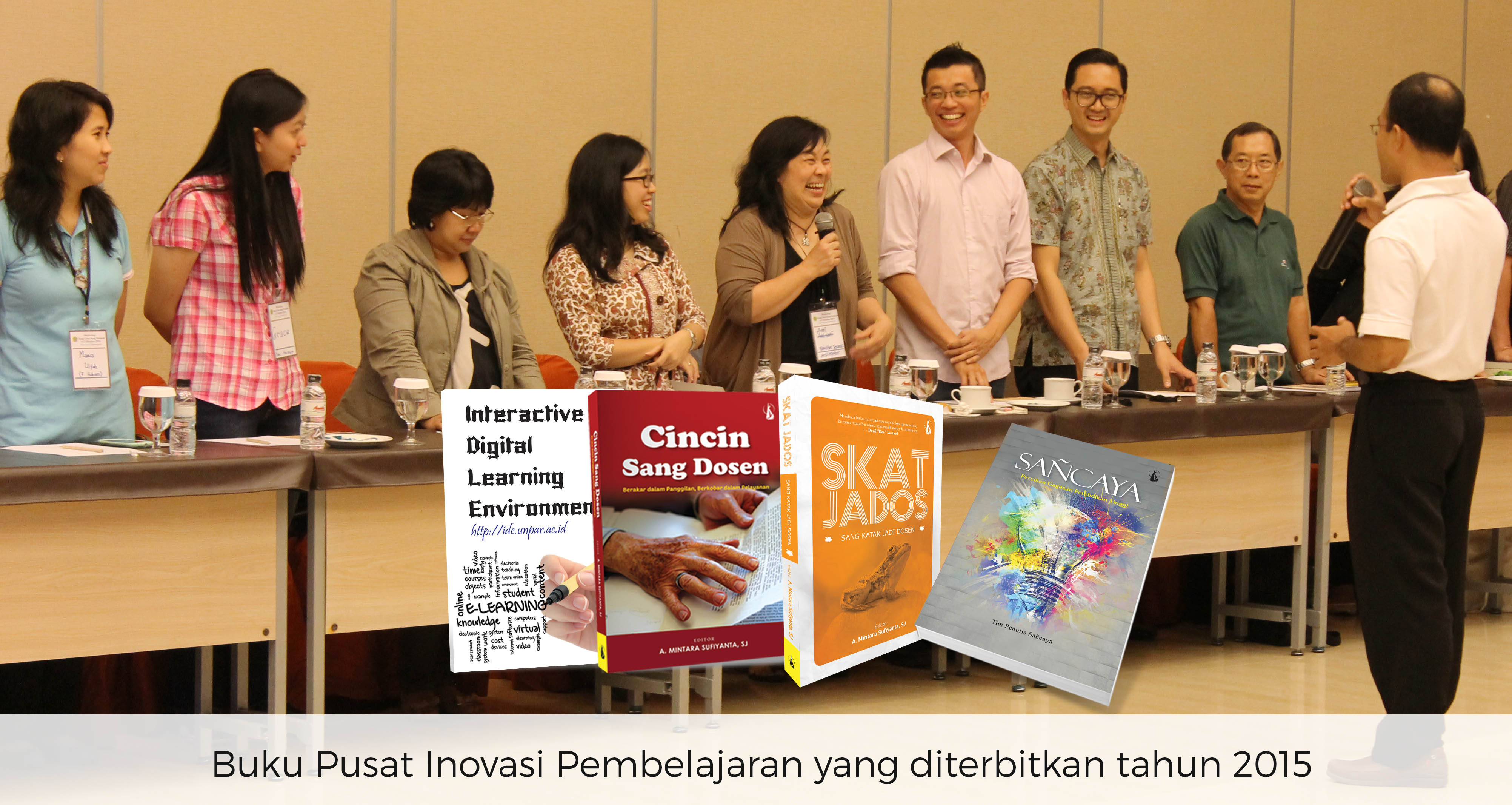
The descriptions and utterances from every individual who was willing to uncover a glimpse of his/her journey of calling to become a lecturer were compiled into two published books entitled, Cincin Sang Dosen (Berakar dalam Panggilan, Berkobar dalam Pelayanan) and SKAT JADOS (Sang Katak Jadi Dosen).
The reflections of experiences written in the books will enrich educators’ understanding of the three main strengths. The first strength is an educational presence requires the importance of educators’ presence among their students. Quality presence from adult educators) have made enormous impact on the development of learners. The beginning of awe is presence.
The second strength is the power of involvement that enables change. The total and sincere involvement in giving services to learners has the power to change the learners’ future.
The third strength is loyalty. Loyalty is an important test for any occupations. Educating is a calling. Without loyalty, presence and involvement become meaningless.
As a place for action and contemplation, UNPAR tries to nurture the awareness inside its educators that to become a lecturer means to be willing to be present, be involved and be loyal to students. With a common understanding as a form of service, UNPAR also offers ideas for education in the book Sancaya: Percikan Gagasan Pendidikan Tinggi.
Through the books published by the Learning Innovation Center of UNPAR, it is hoped that pragmatic perspectives can be avoided and properly handled. [Sylvester KL, / Pusat Inovasi Pembelajaran].
Source : Article “ Menumbuhkan Semangat Mendidik” Kompas Newspaper Griya Ilmu December 15, 2015 edition.